

Jerónimo Villa
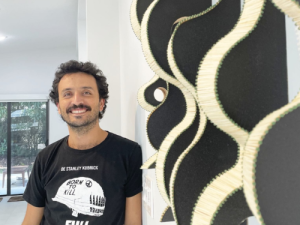
Ultra-contemporary artist Jerónimo Villa was born in Bogota, Colombia, in 1990. Growing up with his sculptor father and fashion designer mother, Jerónimo was drawn to study music and continued the artistic lineage.
Jerónimo’s early works were as experimental and raw as they are today. In the early days of his art he created sculptures from paper, and started experimenting with discarded materials like wire and fragments of window glass and their wooden frames.
He entered the profession of carpentry, making stretchers, frames, and other wooden structures. In working so intrinsically with wood he started to see sandpaper differently. It transformed from an instrument to an indispensable material. He was intrigued by the accidental designs that appeared on the used sandpaper and used them first in collages.
In focussing in on sandpaper, Jerónimo began seeing parallels to life and death in his transition, from using sandpaper on wood to using used sandpaper for artworks made on wood. He sees wood is an allegory to life, and the sandpaper its executioner who is finishing it slowly. Jerónimo sees much more in the materials than their typical value, encouraging their capabilities beyond utility.
With that, Jerónimo Villa has create to create stark beauty out of something hard-working, rough and often misunderstood.
Artist Statement
Among what the work reveals, three key ideas have gradually developed through the process: impossibility, time, and death. The first appears in the constant denial of function and an emphasis on what’s impossible, narrating tensions and elevating oppositions. The latter two emerge through the use of found objects no longer in use or forgotten. The work creates structures of matter and stories in volumetric pieces that tend to express a certain nostalgia for their time. The work choses to adopt objects settled in disuse, intervenes in their form and lost function. It constructs structures where the geometry is clearly expressed.
Encounters with the raw materials usually take place on the streets. More than just abandoned, the objects bear scars of human violence, the blows of climate, and the nature of their own material. They seem determined to cease being themselves with a defined function, and to become instead the friction of time and oblivion. Beside a drainpipe or leaning against posts, sharing space with pungent scents, these nameless objects are collected through an almost entirely instinctive, passionate curatorial choice. They are gradually included in an inventory that lacks contempt and cancels out desolation.
The life-and-death idyll is the conceptual backbone of the work. From there each artwork is born and developed. The found object was dead while alive and is resurrected and entrenched within a process that is conceptual and sculptural.
Chairs, furniture, shutters, trunks, windows. A variety of found objects frozen in time. Some are embedded or bearing insertions, like memories fixed within the mind. Books, ropes, wood, paint, fire. A whole dialogue between materials and objects. The work adopts the nameless and baptizes them with a new order that speaks of space and offers mature stories. It’s an order that installs itself in sculpture, in painting, and above all, in poetry. The object is now a memory, a past imprinted onto the work. Time has stopped and left motionless scenes that evade death and tell only a fragment of what they no longer are.
The work expresses, in different ways and through different media, a longing for times long gone, like a function that no longer exists. Or the scar that the past has left on the material.
-
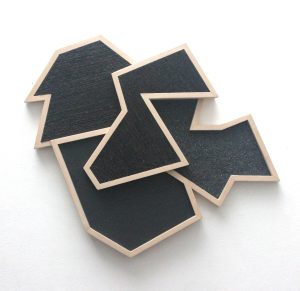
Terraza
63 x 77 x 7.5cm£ 3,000.00 Buy -
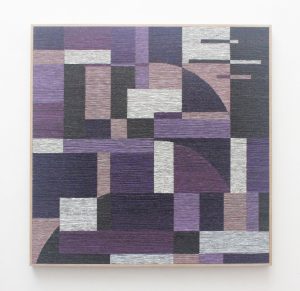
Las Lunas
90 x 90cm£ 4,500.00 Sold -
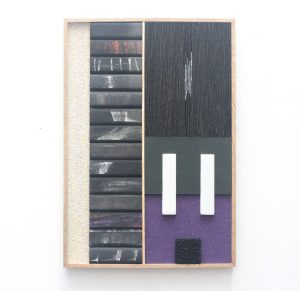
Terrario No. 16
62 x 43 x 4cm£ 3,450.00 Buy -
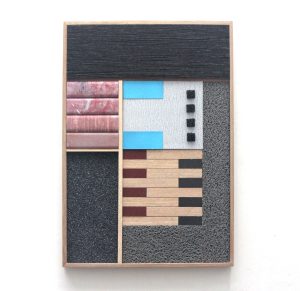
Terrario No. 15
62 x 43 x 4cm£ 3,400.00 Buy -
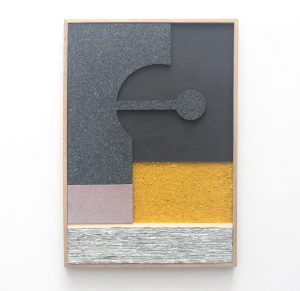
Terrario No. 14
62 x 43 x 4cm£ 3,400.00 Buy -
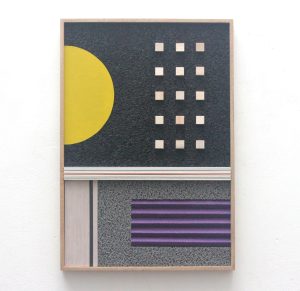
Terrario No. 13
62 x 43 x 4cm£ 3,400.00 Buy -
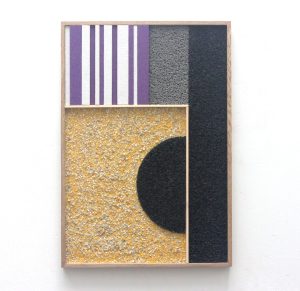
Terrario No. 12
62 x 43 x 4cm£ 3,400.00 Buy -
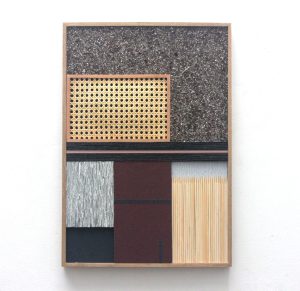
Terrario No. 11
62 x 43 x 4cm£ 3,400.00 Buy